
A $3,000 loan is where borrowing starts to feel like a planning decision instead of a scramble. At this size, people usually have a few days or weeks to think: the old washer is limping along, the plumber has written up a quote, or three credit card statements keep arriving with interest that never seems to shrink. The question is less "how do I survive this week" and more "what is the cheapest, most predictable personal loan or payment option for this over the next year or two."
That shift in timing gives you leverage. You can gather quotes, compare offers and choose a term deliberately. Tripoint Lending is a free loan-connection service, not a lender. It matches you with lenders in its network, and those lenders make the credit decision and set the rate, fees and term. Tripoint Lending's focus on this page is the household and debt-cleanup situations where a 3000 dollar loan tends to make sense, what it costs, and how to judge an offer.
Who Typically Requests a $3,000 Loan
People requesting a $3,000 loan are most often homeowners or renters facing a planned household replacement, or borrowers who want to merge two or three smaller card balances into a single fixed monthly payment.
Compared with smaller personal loans, this loan size draws borrowers who are a little further along financially. Many have some savings but do not want to drain all of it, or they have decent credit and want to swap expensive revolving debt for a fixed personal loan with an end date. Typical profiles among people using Tripoint Lending include:
- Homeowners in their 40s to 60s replacing appliances or fixtures that reached the end of their lifespan at the same time.
- Renters furnishing a new place who need a refrigerator, washer and dryer because the unit came without them.
- Card holders with scattered balances who are paying 25% or more on two or three cards and want one payment.
- Households after a minor water leak where insurance covered part of the damage but not the deductible plus upgrades.
In each case, the borrower usually knows the price in advance and can measure the personal loan against a quote rather than a guess.
Common Uses for a $3,000 Loan
A $3,000 loan most often pays for appliance replacement, plumbing or water-heater work, consolidating a few high-rate card balances, or the deductible and uncovered costs after a household insurance claim.
Replacing appliances that failed together
Appliances bought in the same year tend to fail within a year or two of each other. A front-load washer and matching dryer often run $1,400 to $2,200 together, and a mid-range refrigerator can add $1,000 to $1,500 (estimates). A couple in Michigan, for example, might face a washer that floods the laundry room and a refrigerator compressor that quits a month later. Covering both with a single fixed personal loan avoids putting $3,000 on a store card that can carry deferred interest if the promotion is not fully paid off.
Plumbing and water-heater work
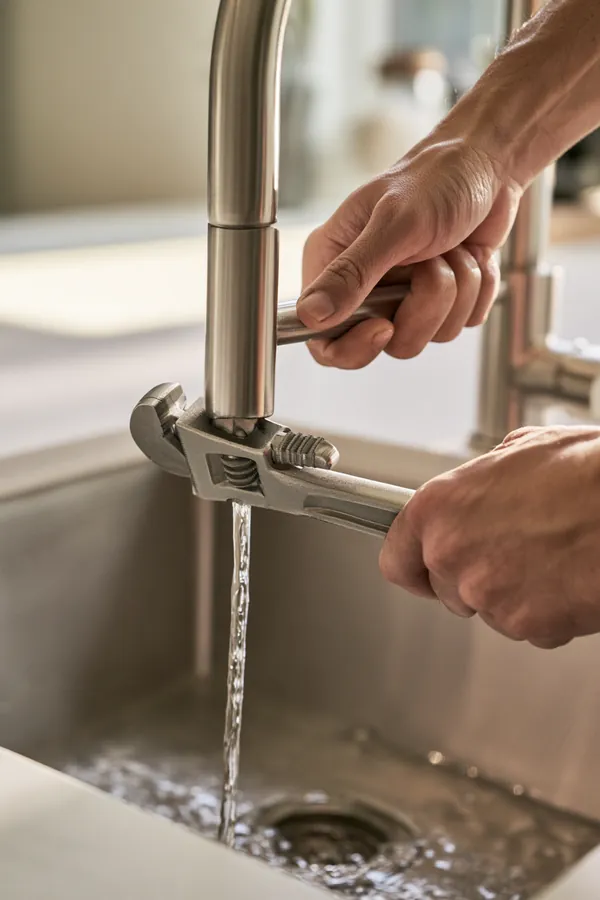
A tank water heater replacement with installation commonly lands between $1,500 and $2,800, and replacing corroded supply lines plus a new kitchen faucet can add several hundred dollars (estimates). Plumbing tends to be urgent once it fails, but you usually have a quote in hand before work begins, which makes it easy to size the personal loan to the bill.
Folding small card balances into one payment
Someone carrying $1,800 on one card and $1,200 on another, both above 25% APR, might use a $3,000 loan at a lower fixed rate to clear them. The appeal is a single due date, a fixed payoff month and, ideally, less total interest. Our overview of debt consolidation loans for card balances explains how to tell whether consolidation will actually save money in your situation.
Covering the gap after an insurance claim
After a burst pipe, insurance may pay for drywall and flooring but leave you with a $1,000 deductible plus items the policy excludes. A $3,000 personal loan can bridge that gap so repairs finish promptly rather than in stages.
Estimated Payments on a $3,000 Loan
Monthly payments on a $3,000 loan run from about $134 to $301 over 12 to 24 months, depending on APR, with total interest from about $115 to $1,251 across the common range (estimates).
Every figure below comes from the standard amortized payment formula, rounded to the cent, with no origination fee assumed. Your actual personal loan APR depends on the lender, your credit profile and your income.
| Estimated APR | 12 months | 18 months | 24 months | 36 months | Total interest at 24 months |
|---|---|---|---|---|---|
| 6.99% | $259.57 | $176.04 | $134.30 | $92.62 | $223.30 |
| 12.99% | $267.94 | $184.33 | $142.61 | $101.07 | $422.67 |
| 17.99% | $275.03 | $191.40 | $149.76 | $108.44 | $594.19 |
| 24.99% | $285.12 | $201.56 | $160.10 | $119.26 | $842.39 |
| 29.99% | $292.45 | $209.00 | $167.72 | $127.34 | $1,025.35 |
| 35.99% | $301.37 | $218.11 | $177.13 | $137.39 | $1,251.03 |
Notice how much the 36-month column costs at higher APRs. At 35.99%, a 36-month plan lowers the payment to about $137.39 but adds about $1,946.19 in interest, nearly two-thirds of the original amount (estimate). Personal loan terms that long are offered by only some lenders, and they make the most sense at lower rates. For context on where rates tend to fall by credit tier, review our guide to personal loan APR ranges.
The cards below show the same 24.99% APR estimate over 6, 12 and 18 months, which helps if you are deciding how fast to repay.
Estimates at 24.99% APR with no fees. Your actual rate, fees and payment depend on the lender.
How an origination fee changes the math
With a 4% origination fee, a lender would deduct about $120 from a $3,000 loan, so you would receive roughly $2,880. If your plumber's invoice is exactly $3,000, you would need to request about $3,125 to net the full amount (estimate). Because the fee is built into the APR, comparing APRs across offers already accounts for it.
Does a 3000 Dollar Loan Beat Paying Down Cards?
A 3000 dollar loan beats paying down cards only when its APR is meaningfully lower than the cards' rates and you stop adding new charges; otherwise the fixed loan simply adds a second payment to the same problem.
Here is a worked comparison (estimates). Suppose you owe $3,000 across two cards averaging 27.99% APR and you can afford about $150 a month.
| Approach | Monthly payment | Months to payoff | Total interest |
|---|---|---|---|
| Keep paying cards at 27.99% APR | $149.76 | 28 | about $1,090.37 |
| $3,000 loan at 17.99% APR, 24 months | $149.76 | 24 | $594.19 |
| $3,000 loan at 24.99% APR, 24 months | $160.10 | 24 | $842.39 |
At a similar payment, the 17.99% loan finishes four months sooner and saves roughly $496 in interest compared with staying on the cards. At 24.99%, the savings shrink to about $248 and the payment rises slightly. If the best personal loan APR you are offered is close to your card rate, consolidation may not be worth it.
Three conditions make consolidation work:
- The personal loan APR is clearly below your current card APRs.
- You pay the cards to zero immediately when the funds arrive.
- You avoid running the card balances back up while repaying the loan.
Qualifying for a $3,000 Loan: Documents and Conditions
To qualify for a $3,000 loan, lenders generally want proof of steady income, a valid ID, an active checking account and a debt load that leaves room for the new payment, with credit history shaping the APR you receive.
At this amount, personal loan lenders tend to pay closer attention to your debt-to-income ratio than they would for a smaller request. A borrower earning $4,200 a month after taxes with $900 in existing payments has more room for a $160 payment than someone earning the same with $1,800 in obligations. Our personal loan eligibility requirements page lists the factors most lenders weigh.
What to gather
- A driver's license, state ID or passport.
- Your Social Security number or ITIN.
- Two recent pay stubs for the personal loan review or, if self-employed, recent bank statements or a tax return.
- Bank routing and account numbers for deposit and autopay.
- For consolidation, your current card statements so you know exact payoff amounts.
Terms you may see in offers
- Direct payment to creditors: a few lenders in the Tripoint Lending network pay your card issuers directly when the purpose is consolidation.
- Autopay rate discounts: small but worth taking if your account balance is reliable.
- Verification requests: an employer phone check or bank-link step may come before funding.
- Prepayment terms: many personal loans let you pay early at no charge; confirm this in the agreement.
Requesting a $3,000 Loan Through Tripoint Lending
Requesting a $3,000 loan through Tripoint Lending takes one short form and a soft credit inquiry that does not affect your score, after which you can review any lender offers with no obligation.
- Start with your quote. Enter the amount from your appliance, plumbing or card payoff total, plus any fee cushion.
- Describe income and expenses honestly. Accurate numbers produce personal loan offers you can actually use.
- Compare offers. Line up APR, term, monthly payment, fees and total repayment for each personal loan offer.
- Complete the application with one lender. That lender may run a hard credit inquiry and verify your income before approval.
- Get funded. Funding often arrives as soon as the next business day after approval, depending on the lender and your bank.
Tripoint Lending does not lend money or set terms, and the service costs nothing to use. If none of the offers improve on what you already have, you can simply decline.
Choosing Between Offers on a 3000 Dollar Loan
Choose between offers by ranking them on total repayment first, then confirming the monthly payment fits with room to spare, then checking fees, prepayment rules and funding speed against your deadline.
Imagine two offers on a 3000 dollar loan. Offer one: 12.99% APR for 24 months at about $142.61 a month, about $422.67 total interest. Offer two: 17.99% APR for 18 months at about $191.40 a month, about $445.25 total interest (estimates). Offer one is cheaper overall and easier on the monthly budget, so it wins on both counts. When the comparison is not that clear, ask yourself which risk is bigger for your household: paying a bit more interest, or facing a payment that strains every month.
Before accepting any offer found through Tripoint Lending, use the loan payment calculator to test your own amount, APR and term before you accept. Questions worth asking each lender:
- Is the rate fixed, and is the payment the same every month?
- Is there an origination fee, and is it deducted from the funds?
- What happens if a payment is a few days late?
- Can I choose my due date?
- Will you pay creditors directly if I am consolidating?
When to Request a $3,000 Loan for Planned Work
The best time to request a $3,000 loan for planned household work is after you hold a written quote and before the contractor schedules the job, so the personal loan amount matches the real bill.
Borrowing too early means paying interest on money that sits in your account while you wait for an installer. Borrowing too late can mean a rushed decision or a card swipe at a higher rate. A simple sequence keeps things tidy:
- Collect two or three quotes. Note what each one includes, such as haul-away of the old appliance, permits or new supply lines.
- Pick the contractor and confirm the date. Ask whether a deposit is required and when the balance is due.
- Check offers through Tripoint Lending about a week before the balance is due. The soft inquiry will not affect your score.
- Accept the personal loan that fits. Time the funding so it lands close to the payment date.
A homeowner in Arizona replacing a water heater, for example, might receive a quote for $2,650 with a $500 deposit. Paying the deposit from savings and requesting a $2,150 personal loan for the balance trims the borrowed amount and the interest that comes with it. Small adjustments like that add up over a 24-month term.
People sometimes search for this service as tri point lending; either way, the process and the no-obligation terms are the same.
Making a $3,000 Loan Work for Your Household
A $3,000 loan works best when it replaces a cost you would have faced anyway, carries a lower total cost than your alternatives, and comes with a written plan to avoid rebuilding the same balance afterward.
For appliance purchases, compare the personal loan against retailer financing. A store's zero-interest promotion can be cheaper if you can pay it off before the promotion ends, but deferred-interest plans can charge back interest on the full original amount if even a small balance remains. A fixed personal loan avoids that trap because its cost is clear from day one.
For plumbing and repairs, get at least two quotes. A difference of $400 between contractors is common, and borrowing less is the most reliable way to pay less interest.
For consolidation with a personal loan, consider lowering your card limits or storing the cards somewhere inconvenient once they are paid off. The interest savings from consolidating only materialize if the balances stay at zero.
Alternatives worth a look
- Utility or manufacturer rebates on efficient water heaters and appliances can trim the amount you need.
- Balance transfer cards may beat a personal loan for consolidation if you can clear the balance during the promotional period.
- Splitting with savings: paying $1,000 from savings and borrowing $2,000 reduces interest and keeps a smaller cushion intact.
- Credit union personal loans can carry lower APRs for members with good credit.
Whatever you decide, keep a copy of the personal loan agreement and your payment schedule, and contact the lender early if your income changes. Below are nearby amounts if a slightly smaller or larger loan would match your quote more closely.
Nearby loan amounts
- Need a little less? See $2,000 loan options.
- Need a bit more? See $5,000 loan options.
$3,000 Loan Questions
What is the monthly payment on a $3,000 loan over 24 months?
At an estimated 24.99% APR, the payment is about $160.10, with about $842.39 in total interest. At 12.99% APR it falls to about $142.61. Your rate depends on the lender and your credit.
Can I use a $3,000 loan to pay off credit cards?
Yes, many lenders allow consolidation as a loan purpose. It saves money only if the loan APR is lower than your card rates and the cards stay paid off afterward.
Does checking my rate affect my credit?
Checking offers uses a soft inquiry that does not affect your credit score. If you accept an offer and proceed, the lender may run a hard inquiry as part of its review.
How long can I take to repay $3,000?
Terms commonly range from about 3 to 24 months, and some lenders offer up to 36 months. Longer terms lower the payment but increase total interest.